
|
|


.png)


Real-Time Online Freight Calculator for Shipping Goods from the USA
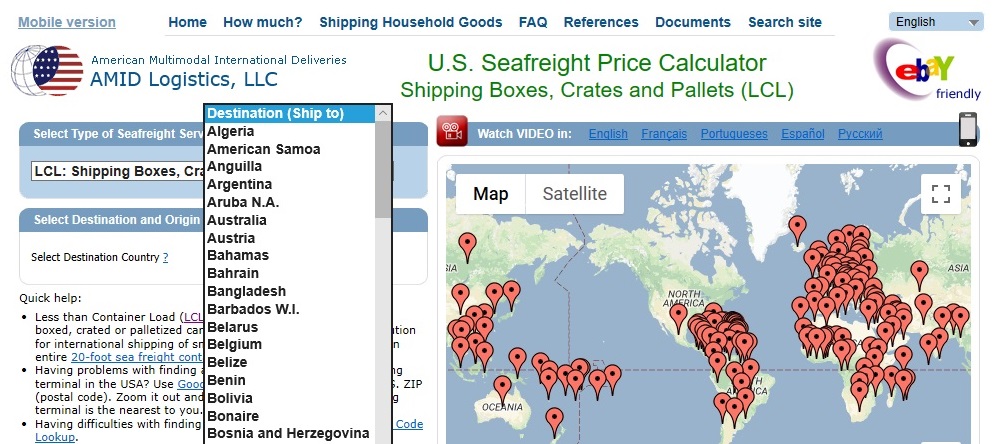
Select your destination country above to begin calculating your affordable international shipping costs.
This platform is designed to simplify global cargo transportation, whether you're handling commercial loads or sending personal belongings overseas. This service is for exporters from the USA using LCL (Less Than Container Load).
If you're unsure of your cargo’s exact weight or dimensions, that’s not a problem. You can estimate for now, and once your goods reach the ocean terminal, the final international shipping cost will be updated based on the actual measurements.
Once you've received an instant price quote and are ready to proceed, book your shipment via the quote. This guide offers step-by-step instructions for managing LCL freight using our online calculator.
You’ll receive our instructions within 24 business hours. Submit your commercial invoice or a Valued Packing List. Receive your Express Release Bill of Lading in PDF format. Managing your overseas transit is that simple.
- You can save on U.S. domestic inland logistics. Moving freight domestically is expensive, sometimes more so than ocean freight. If you deliver your cargo directly to a CFS (Container Freight Station), you eliminate domestic trucking expenses and reduce your overall export expenditures. "Ocean freight" refers to the marine transport between CFS terminals at the origin and destination. If either terminal is inland, the price will include trucking services to or from the seaport.
- When you bring loose boxes to a CFS, they can be palletized onsite. That means the terminal will stack your boxes on pallets and shrink-wrap them. This makes cargo handling easier and safer. Smaller boxes are easier to manage than oversized pallets, and proper palletization can help avoid extra charges. Cardboard boxes are fine as long as they meet ISPM 15 standards. Once packed, stack them on certified or plastic pallets. This helps with regulatory compliance. This ensures the skids meet all legal requirements. Once your items are palletized and ready, the process becomes smooth and manageable, even for first-time shippers.
- You'll receive our instructions within 24 business hours. Submit your commercial invoice or a Valued Packing List. Receive your Express Release Bill of Lading in PDF format.
This tool is designed for everyone, from individuals sending personal goods and e-commerce shippers to businesses involved in worldwide trade. It allows you to quote, book, and ship with a dependable international shipping company, all from the convenience of your computer.
With this system, you can ship medium to large-sized cargo from the USA quickly and affordably. A brief 3-minute YouTube video explains precisely how it works, making it perfect for those moving goods overseas.
Helpful tips:
- To find the nearest Container Freight Station (CFS) in the United States, select your destination country and city, then filter by state. You can then check distances using Google Maps. For ZIP codes, the USPS ZIP Code Lookup can help.
- The most affordable way to ship goods from the USA is to deliver them directly to a CFS (as highlighted in uppercase in the online freight calculator, such as PHILADELPHIA, PA).
- If you need pickup from your location, select a pickup option during the quote request and enter your ZIP code at the final step.
As a trusted freight forwarder, we believe in transparent, up-front pricing.
What is LCL, and Why Is It a Cost-Effective Option?
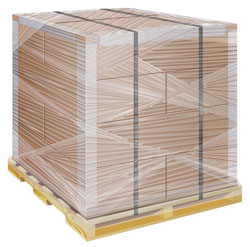
LCL stands for "Less than Container Load," which refers to shipments that don’t require a full container. Instead, your goods, typically packed in boxes, crates, or on pallets, share space with the loads of other shippers. This method is widely used in international cargo transportation due to its affordability and flexibility.
If your total cargo volume is under 15–20 cubic meters (about 500–800 cubic feet), LCL is more economical than booking a full container (FCL). It's one of the best ways to reduce your international freight rates while still enjoying the reliability and structure that a professional international cargo transportation company provides.
LCL also works well for personal shipments. If you’re moving household goods or personal effects packed in crates or boxes on pallets, using LCL often makes more financial sense than hiring a full-service international moving company. You don’t need to be a business to ship overseas household goods with a U.S. freight forwarder.
If you ship personal belongings from the U.S., it's worth reviewing the differences between LCL and moving company services. Choosing the right option can prevent confusion and reduce prices.
LCL is also significantly more affordable than air freight or small-parcel services for larger shipments. Think of it as the economy class of multinational logistics - reliable, efficient, and budget-friendly.
How LCL Can Save You Money
- You only pay for the space your load occupies in the container. This is the main reason LCL is often the most affordable international shipping option.
- LCL pricing is based on volume (measured in cubic meters or cubic feet), not weight. That means you don’t have to worry if your shipment is heavy - only the size matters.
- You can save on U.S. domestic cargo transportation. Domestic transport of goods is expensive, sometimes more so than sea freight. If you deliver your goods directly to a CFS, you eliminate domestic trucking expenses and reduce your overall costs.
- “Ocean freight” refers to the transportation between CFS terminals at the origin and destination. If either terminal is inland, the price will include transport to or from the seaport. An international shipping company with global logistics expertise should help you optimize routes and pricing.
Flexibility and Convenience
- When you bring loose boxes to a CFS, they can be palletized onsite. That means the terminal will stack your boxes on pallets and shrink-wrap them. This makes handling easier and safer. Smaller boxes are easier to manage than oversized pallets, and proper palletization can help avoid extra charges.
- With LCL, you can ship items of various shapes and sizes, provided they fit within a standard 40-foot multimodal container. Standard internal dimensions are: Length: 39’5” (12 meters), Width: 7’5” (2.35 meters), Height: 7’10” (2.39 meters).
- Cardboard boxes are fine as long as they meet ISPM 15 standards. You can find heavy-duty boxes at places like U-Haul, Walmart, or Office Depot. Once packed, stack them on certified or plastic pallets. This helps with handling and compliance.
- Palletization at the terminal typically costs between $35 and $50 per pallet. It’s recommended to let CFS professionals handle this rather than attempting it yourself, unless you’re a professional in global cargo transportation. This ensures the skids meet all regulatory requirements.
- Once your goods are palletized and ready, the process becomes smooth and manageable, even for first-time shippers.
- LCL offers a practical and affordable international shipping option for those sending goods from the United States. Whether you're a small business or an individual, the flexibility, savings, and simplicity of LCL make it a wise choice. You can save on international freight costs by delivering to a terminal rather than arranging pickup.
Frequently Asked Questions (FAQ) About Using LCL.
1. What is sea freight?
Ocean freight is the global transport of cargo by sea, typically in multimodal containers. It’s the most cost-effective way to send goods internationally.
2. How does less-than-container load (LCL) work?
LCL allows you to ship smaller quantities of merchandise overseas without committing to a full container. Your shipment is combined with others, allowing you to pay only for the space you use. It's the most affordable international transit option. It’s ideal to work with a trusted freight forwarder that understands regulatory compliance.
3. How do I calculate my global shipping costs?
Our online freight calculator makes it easy to estimate your cross-border delivery costs. Rates depend on cargo size (cubic meters or cubic feet), destination, and delivery method.
4. What documents are required?
Typically, you need:
- A commercial invoice or packing list
- A bill of lading (BOL)
- Any destination-specific documents (e.g., customs forms)
5. What is an Express Release Bill of Lading?
An Express Release BOL allows your consignee to claim cargo at the destination without presenting the original documents, thereby streamlining the import recovery process.
6. What is the cheapest way to ship internationally?
You can self-deliver your boxes, crates, or pallets to a U.S. terminal listed in our system. The cheapest way to ship internationally is to deliver cargo to a CFS (Container Freight Station).
7. How long does sea freight take?
Transit time varies depending on destination:
- Latin America/Caribbean: 2–3 weeks
- Europe: 3–4 weeks
- Asia/Africa: 4–6 weeks +
Please note that these times are estimates and may vary.
8. Are there countries that require original bills of lading?
Yes, some countries — such as Argentina, Brazil, Ecuador, and several African nations — often require original Bills of Lading (BOLs) instead of express releases. We will advise you if originals are necessary for your destination.
9. How do I start moving my goods overseas?
Please use our online calculator to estimate international shipping costs for moving your goods from the United States. We aim to provide reliable global cargo transportation solutions tailored to your needs. Our reputation as a trusted U.S. Freight Forwarder has been earned through 20 years of experience.


