
|

|
Freight from the USA
|
|
|
|||
.png)
|
U.S. Sea freight Price Calculator
Shipping Boxes, Crates and Pallets (LCL)
|

|
Use the freight calculator above to find accurate international shipping costs from the United States. Select your destination country to receive quick estimates.
When shipping goods internationally from the USA, the Notice of Arrival (AN) is a crucial document in the maritime transport process. It notifies the consignee - the person or company receiving the shipment - that the ocean freight is about to arrive in their country and outlines the cargo recovery steps to be taken.
The destination agent of the international sea carrier typically sends this official notice. It includes essential shipment tracking details, such as the cargo's estimated arrival date (ETA), pickup location, required documents, and landing fees for customs clearance and cargo release.
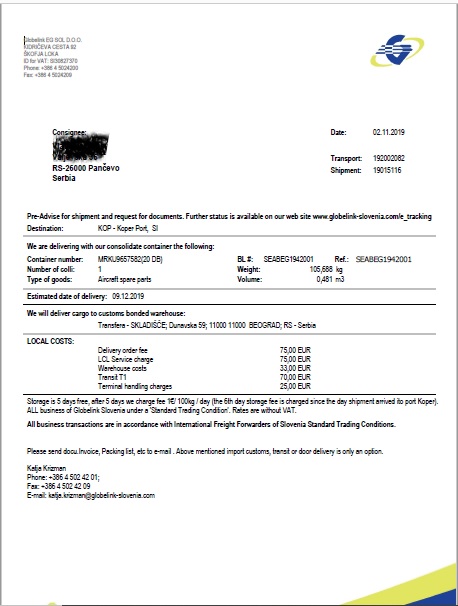
Every international shipment includes destination port charges, which are not included in your initial U.S. freight quote. These can include:
Government-related fees, including import duties, VAT, customs processing, harbor fees, and entry filing by a licensed customs broker.
Charges for terminal handling (THC), de-consolidation, warehousing, or storage.
Additional costs if you opt for door-to-door delivery service in the destination country.
These local expenses must be paid by the consignee, usually before the freight release is authorized. Payment delays can result in demurrage charges or customs penalties.
The destination agent usually sends the arrival notification by email, sometimes by fax. It typically arrives a few days before the vessel reaches the port. To ensure authenticity, the notice should:
Be on the agent's official letterhead with full contact details.
Include freight details and references, such as the location LOT number.
Specify the pickup address and provide clear instructions for retrieving your cargo.
List all applicable local port fees.
Note: The arrival alert is not a release document; it serves as a signal to initiate the import recovery process.
The consignee (or importer of record) is responsible for initiating recovery and making payments.
The destination agent, acting on behalf of the global shipping line, facilitates cargo release.
Customs officials and terminal operators ensure compliance with local import laws.
Independent customs agents may be involved, especially for complex shipments.
Domestic freight handlers, bonded warehouses, and local cartage companies may also assist.
Once your goods leave the U.S., American laws and companies no longer have control. The consignee must deal with the local port agent and customs authorities. Your U.S. freight forwarder cannot resolve problems at the destination.
For most LCL (Less-than-Container Load) shipments, the carrier's agent handles customs entry. However, for sensitive or high-value shipments, having your own private customs broker is a wise precaution.
If something goes wrong, for example, you didn't receive the arrival notification, please notify your shipping provider immediately. Share a copy of your Bill of Lading and any related emails. They may be able to coordinate with the carrier to locate your shipment and assist you in moving forward.
Start working on the import recovery process as soon as you receive the Notice of Arrival. This can help you avoid unnecessary delays, port storage fees, or extra customs penalties.
|
|



