
|

|
Freight from the USA
|
|
|
|||
.png)
|
U.S. Sea freight Price Calculator
Shipping Boxes, Crates and Pallets (LCL)
|

|
Get a freight price in just a few clicks. Start by selecting your destination country from the list above. Our online freight calculator makes it easy to estimate your total international shipping costs while shipping goods from the USA.
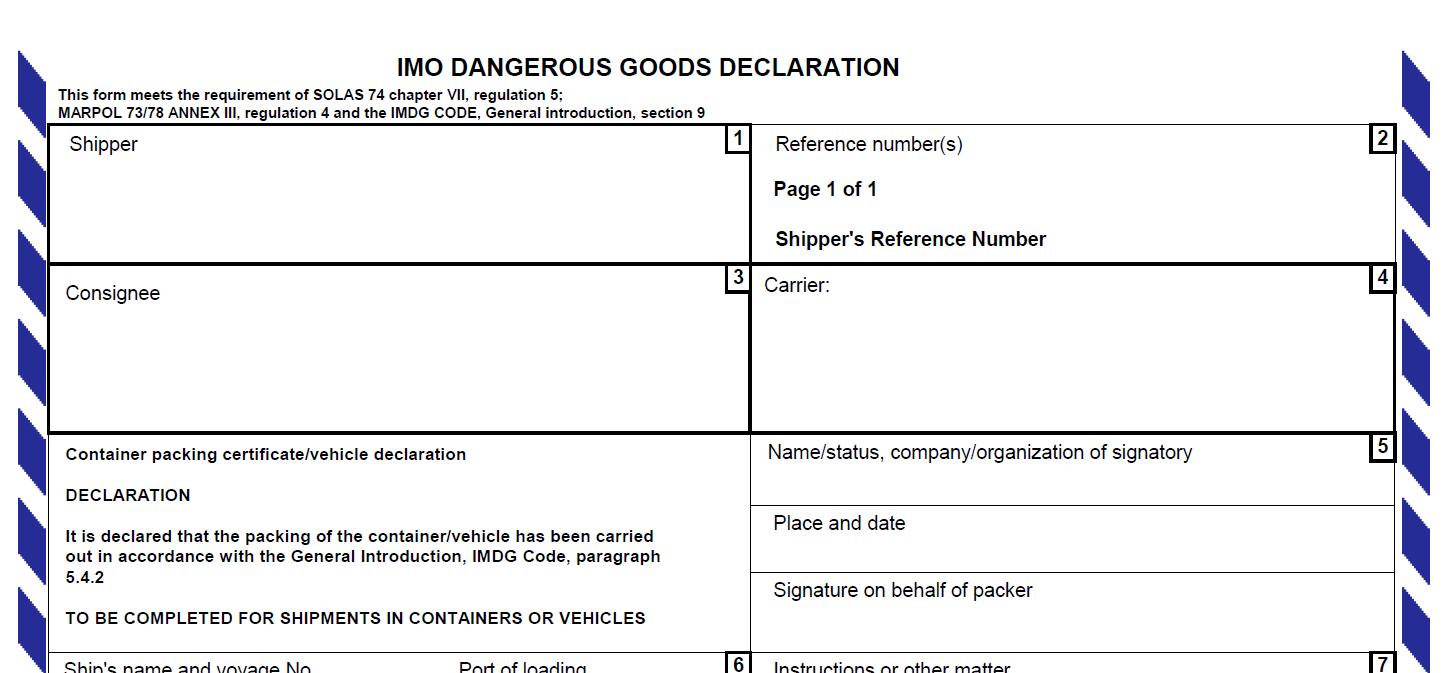
When delivering items overseas, certain hazardous substances are strictly regulated due to safety risks. Within the maritime transport sector, these are classified as regulated consignments, which parallel the Hazardous Materials (HAZMAT) protocols used in air or ground logistics. If your ocean-going freight contains any hazardous components, the IMO Dangerous Goods Declaration is a mandatory legal requirement.
This document certifies that your regulated cargo is accurately identified, packed, and labeled in accordance with the IMDG Code. Without this certified declaration, your shipment will be denied loading, and attempting to bypass these safety rules can result in severe legal penalties.
Not all hazardous cargo is immediately evident to the shipper.
Before initiating global logistics from the USA, check your inventory for:
Lithium-ion batteries (standard in e-bikes or laptops).
Aerosol sprays, paints, or flammable liquids.
Lead-acid batteries and other corrosive materials.
Industrial cleaning agents or pool chemicals.
Fireworks or explosive pyrotechnics.
If you are transporting any of these items, or are uncertain if your maritime shipment qualifies, inspect the packaging for warning symbols or request a Safety Data Sheet from the manufacturer.
Detailed Shipper and Consignee information.
The specific UN number.
Hazard Class (e.g., Class 3 for flammables, Class 8 for corrosives).
Packing Group and emergency contact details.
A signed confirmation of compliance with maritime safety standards.
Exporters in the United States are responsible for completing this paperwork and submitting it to their freight provider before loading the container. Experienced logistics companies will verify your documentation to ensure it meets International Maritime Organization (IMO) regulations. If you require assistance, consult a specialist or review official sea freight documentation examples.
Most vessel operators exclusively accept regulated materials falling under the following categories:
Class 3: Flammable liquids.
Class 8: Corrosive substances.
Class 9: Miscellaneous items (including shipping lithium batteries by sea).
Certain incompatible chemicals must be segregated during ocean transit to prevent dangerous reactions. For instance, water-reactive materials cannot be stored adjacent to liquids. These stowage requirements are vital to avoiding shipboard fires, toxic leaks, or explosions.
To address these risks, the carrier requires a Hold Harmless Letter. This document confirms:
The shipping line is not liable for any damages arising from the necessary cargo segregation.
The shipper will cover any costs associated with specialized handling.
Clear instructions are provided for items requiring physical separation.
Do not overlook the hazmat declaration: even minimal quantities of regulated materials must be reported. It is a federal and international mandate. Maintain all original records, including the Dangerous Goods Declaration and Hold Harmless Letter. For complex orders, consider professional packing services to ensure your maritime exports are securely packed and labeled in full compliance with applicable laws.
Preparing the correct overseas shipping paperwork is essential for a smooth transit from the USA. The dangerous goods form ensures safety at sea, protects all stakeholders, and facilitates the efficient movement of your cargo. Whether you are shipping industrial chemicals or battery-powered consumer goods, staying compliant helps you avoid shipping delays, heavy fines, or cargo rejections. Partner with a reputable cargo carrier, accurately declare every item, and provide clear segregation notes to ensure successful delivery.
|
|



