
|

|
Freight from the USA
|
|
|
|||
.png)
|
U.S. Sea freight Price Calculator
Shipping Boxes, Crates and Pallets (LCL)
|

|
Select a destination country above to begin calculating affordable international shipping costs for freight from the United States.
Regulated materials can pose significant safety risks during transportation. These commodities are divided into classes 1 to 9, based on their chemical or physical hazards. Most ocean freight companies only ship restricted cargo classified as classes 3, 8, and 9. If you need to export goods from other classes, find a HAZMAT carrier that specializes in transporting dangerous goods.
Strict rules govern the shipment of restricted materials from the USA and require carrier approval before you can book a shipment. Additionally, you will likely incur mandatory maritime fees for shipping hazardous items, which can be high and typically include a minimum per-consignment charge.
The DG (Dangerous Goods) surcharge is not included in the international price quotes received through our online freight calculator.
When quoting an international shipment using our online freight calculator, select the Hazardous Materials option. You must provide a completed Dangerous Goods Declaration (IMO), wait for the ocean freight carrier to approve the hazardous classification, and be informed of applicable surcharges.
We advise against shipping restricted items unless you are a professional in HAZMAT logistics. For example, ensure you remove the battery when sending an electric lawnmower to comply with safety standards.
If you need to ship such cargo, prepare your IMO Dangerous Goods Declaration well in advance. The International Maritime Organization (IMO) requires this compliance document; without it, carriers cannot approve your hazardous sea freight shipment. You can submit a draft of your IMO for pre-approval, but it should not include sailing details. The signed declaration must be attached to the HAZMAT cargo before shipping.
A maritime Dangerous Goods Declaration certifies that hazardous goods transported from the United States are packed, labeled, and declared under international IMDG Code standards. Sample DGD forms for international shipping from the USA are available online.
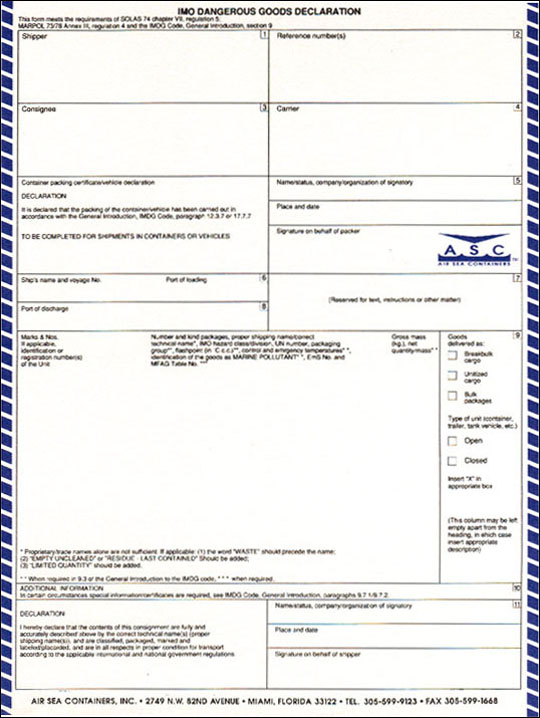
Shippers must provide declarations for shipments from the USA and identify whether their sea freight contains hazardous materials. If any part of the shipment contains restricted items, the entire consignment is considered hazardous unless that part is booked separately.
Shippers must identify, classify, pack, mark, label, and complete all necessary documentation for international HAZMAT transport. Failure to comply with these maritime rules can create hazardous conditions on the cargo ship and may result in heavy fines or even criminal charges.
Before shipping, determine if your cargo includes government-regulated materials. This includes items like aerosol sprays, airbags, ammunition, butane, car batteries, cologne, dry ice, fireworks, gasoline, jet fuel, lighters, lithium batteries, matches, nail polish, nail polish remover, liquid nitrogen, paint, perfume, solvents, and other volatile chemicals.
If you are unsure if your shipment contains hazardous materials or need help identifying and classifying them, contact the US Department of Transportation at 1-800-467-4922. You can also contact the manufacturer for a Material Safety Data Sheet (MSDS).
Remember that most international sea freight carriers will not accept restricted substances for shipping from the USA unless they fall under IMO Classes 3, 8, and 9. Transporting hazardous substances outside these classes requires a carrier with specialized handling equipment.
Some dangerous goods cannot be mixed with other substances. They may react with different hazardous materials or chemicals, or with seemingly safe items such as dust, air, or water. Dangerous items can come into contact with incompatible substances through spills or leaks, potentially releasing toxic gases and causing fires or explosions.
It is a legal requirement for US exports that hazardous goods found to be incompatible with other substances must be stored and handled separately. This helps prevent incidents at sea from spills or unintended reactions. You can achieve this by using a waterproof barrier or keeping a safe distance between items.
If an ocean freight carrier needs to segregate dangerous goods during international shipping, the sender must provide a HOLD HARMLESS LETTER on their letterhead.
|
|



